
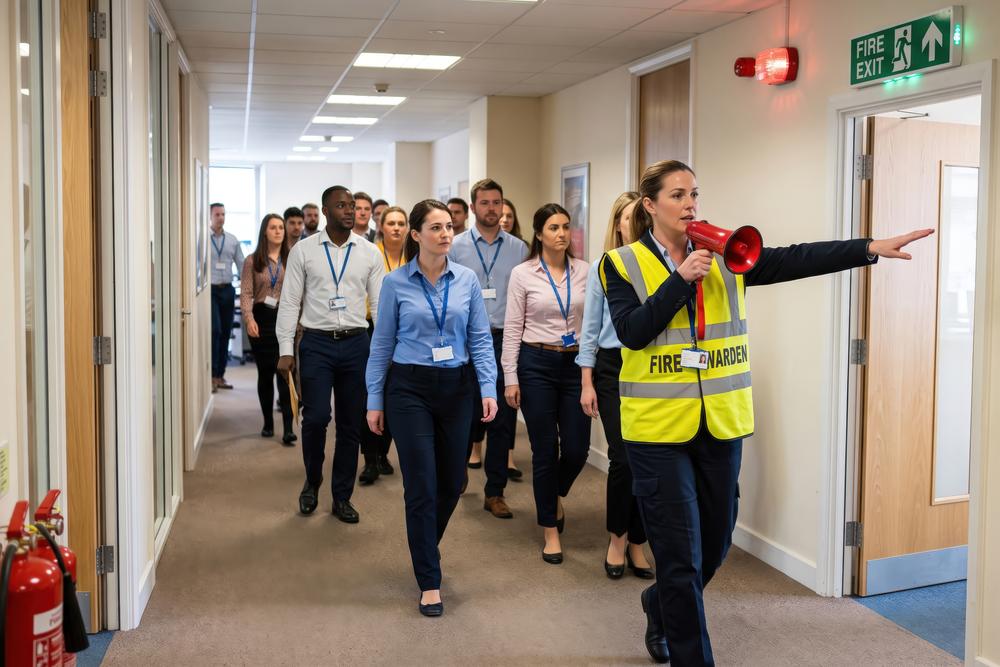
An active shooter emergency leaves people very little time to decide where to move and how to communicate. Personal Protection Solutions provides active shooter response training that prepares employees, staff, and volunteers to recognize warning signs, make informed decisions, and support first responders, using the layout of the building where they actually work.
Training is part of our personal protection training programs and is delivered on site for organizations across Maryland, Washington, D.C., Virginia, and the wider Mid-Atlantic. Sessions are calm, factual, and practical.
What Active Shooter Response Training Covers
Recognizing warning signs
Many attacks are preceded by concerning behavior. Participants learn which behaviors to report and how to report them through your organization’s chain of contact.Run, hide, fight decision-making
We teach the widely used run, hide, fight framework found in federal guidance such as the CISA active shooter preparedness resources, applied to your facility’s exits, rooms, and choke points so the guidance is specific rather than abstract.Communication during an emergency
Staff practice what to tell 911 dispatchers, how to alert colleagues, and how to share information about the threat’s location without putting themselves at greater risk.When law enforcement arrives
Participants learn what to expect from responding officers, why to keep hands visible, and how to follow commands, which reduces confusion in the first critical minutes.Accounting for people afterward
We cover how supervisors account for employees, visitors, and contractors, share verified updates, and direct responders toward anyone who still needs help.Training Built Around Your Facility
Before training, we review how your location normally functions: entrances, visitor procedures, shift changes, and areas employees rarely use. Sessions are adapted for:
- Corporate offices and multi-tenant buildings
- Medical facilities and retirement communities
- Schools and childcare centers
- Churches and other houses of worship
- Warehouses, distribution centers, and construction sites
Strengthening Your Security Program
Training is one layer of preparedness. Many organizations combine it with an enterprise security risk management assessment to review access control, camera coverage, and emergency plans. Where the risk calls for it, PPS can also provide armed security guards or unarmed officers for daily coverage or events, and our guide to choosing between armed and unarmed security can help you weigh the options.Why Choose Personal Protection Solutions
PPS was founded by Christopher Quirk, a U.S. Army veteran with 18 years of service and more than 500 executive protection details. Our instructors bring protective and threat assessment experience, and they present difficult material in a calm, respectful way. Training is scheduled around your operations, and our team is available 24/7 for questions or urgent security needs.Active Shooter Response Training FAQs
Length depends on group size, format, and whether a facility walk-through or tabletop exercise is included. We recommend a schedule after reviewing your location and goals, and we can split training across shifts so your operations stay covered. Larger organizations often combine an all-staff session with more detailed training for managers.
Our goal is preparation, not fear. Instructors present the material factually, explain why each step matters, and give participants time to ask questions. We avoid graphic content and unannounced drills, and we can adjust the session for groups that include people who have experienced violence or find the subject difficult.
Yes. PPS delivers on-site training across Maryland, Washington, D.C., Virginia, Delaware, Pennsylvania, New Jersey, West Virginia, Ohio, Michigan, and North Carolina. Each session is adapted to that building’s layout and procedures, so a multi-site organization receives consistent principles with guidance specific to every location.
Many organizations review it annually and whenever they move facilities, add significant staff, or update emergency plans. Refresher sessions keep the decisions familiar and help new employees learn your procedures. We can recommend a schedule based on turnover and the risks at your location.
No. Training helps people respond during an emergency, while security officers, access control, and planning help deter and detect threats earlier. No single measure removes every risk, and the right combination depends on your facility. A security assessment can help you decide whether officers, procedural changes, or both make sense.